Branding in 2026: The Trends, Terms, and Brands Worth Watching Right Now
A clear, jargon-free tour of where branding actually stands in mid-2026 — the trends rewriting the rules, the terminology you'll keep bumping into, and the brands getting it right.
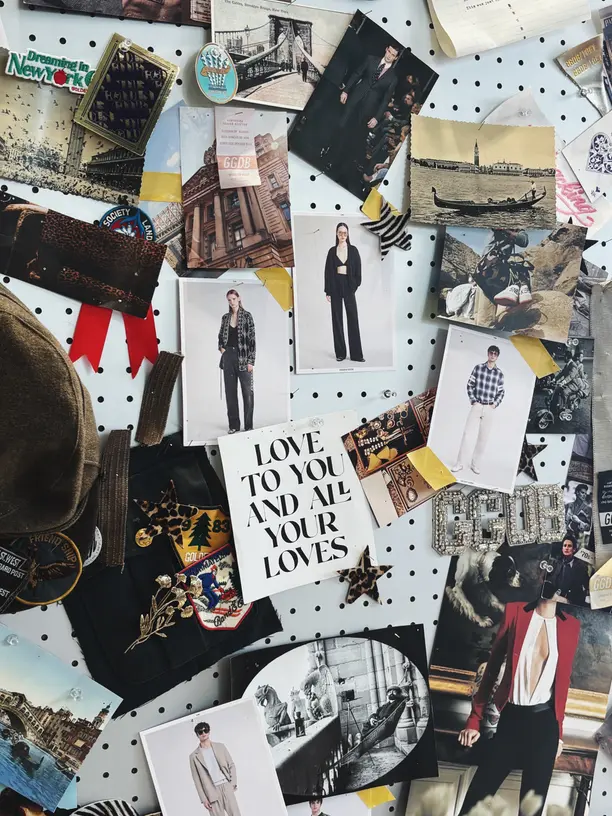
Branding is having a genuinely strange, exciting moment. If the 2010s were the era of "blanding," with every startup flattening into the same clean sans-serif and pastel gradient, then 2026 feels like the opposite. The rules are being rewritten in real time by AI, social platforms, and a generation of consumers who can smell inauthenticity from a mile away.
Whether you're building a personal brand, running a small business, or just trying to make sense of why every logo suddenly moves now, here's a clear, jargon-free tour of where branding actually stands in mid-2026: the trends, the terminology, and the brands getting it right.
First, what "branding" even means anymore
A brand used to be a logo, a color palette, and a tagline. In 2026 that definition has stretched way past anything you can put in a style guide.
The phrase designers keep using is "total branding," the idea that any moment, online or in person, can become a brand-defining touchpoint. A reply on social media, the sound your app makes, the tone of your customer service chat, the way an AI assistant describes you to a shopper: all of it is now "the brand." Identity has shifted from a fixed thing you design once to an adaptive system you maintain everywhere.
That's the backdrop. Now let's get specific.
The trends shaping branding right now
1. AI agents have become the new gatekeepers
This is the single biggest shift, and it's worth understanding deeply. People increasingly don't search and scroll the way they used to. They ask an AI assistant (ChatGPT, Claude, Perplexity, Google's AI Overviews, Amazon's Rufus) and the assistant filters, compares, and sometimes buys on their behalf.
Kantar's 2026 research found that roughly a quarter of AI users already lean on AI agents to help with purchases, and the majority of AI assistant users actively seek out AI-generated brand recommendations. Meanwhile, Google's AI Overviews have measurably cut click-through rates, with some analyses showing drops of 18% on average and far steeper declines for informational searches.
The takeaway: ranking #1 on Google is no longer the finish line. The new question is whether an AI will cite you and recommend you when someone asks "what's the best [your category]?" Brands now have to earn the trust of non-human gatekeepers, not just human eyeballs.
2. Identities that move, sound, and adapt
Static logos are giving way to kinetic (animated) logos and sonic branding, the deliberate use of sound, like a signature audio cue or jingle, as part of the identity. Think of the little sound a brand's app plays, or a recognizable audio sting in a video. As more brand interactions happen on screens and through audio (voice assistants, short-form video, podcasts), sound and motion have become core brand assets rather than afterthoughts.
Alongside this, the dominant design philosophy is the adaptive identity: instead of one rigid logo, brands build flexible systems that can flex and reshape across every platform while staying recognizable.
3. The death of "skin-deep," and the rise of weird
There's real fatigue with safe, generic, committee-approved design. Designers are openly arguing that "being weird" is what will save branding in 2026. You're seeing more grain, texture, collage, scrapbook and zine aesthetics, and proudly handmade, imperfect work. After years of sterile minimalism, the pendulum is swinging toward identities that feel human: a little messy, a little surprising, unmistakably made by people.
4. Purpose and privacy as brand currency
Consumers, especially Gen Z, increasingly choose brands whose values line up with their own. Purpose-driven branding (think Patagonia's long-running environmental stance) continues to resonate when it's genuine and woven into the actual business, not bolted on as a marketing slogan.
Closely related is privacy-first branding. Surveys suggest a large majority of consumers read a company's data practices as a signal of how much it respects them. In 2026, being transparent about how you collect and use data is itself a branding move.
5. Personal branding grows up
Personal branding is shifting from performance (posting constantly to look impressive) to ownership, building real relationships and an actual body of work. At the same time, micro-communities are quietly outperforming broad social reach. Kantar's data showed brands using knowledge-sharing micro-communities saw meaningfully higher marketing ROI, and many consumers now trust peer recommendations inside these communities nearly as much as recommendations from friends.
The terms everyone's using, explained
Marketing loves its jargon. Here are the words you'll keep bumping into in 2026, in plain English with examples.
Brand equity: The extra value a product has simply because of who makes it. A plain white sneaker and a Nike sneaker can be physically similar, but people pay more for the Nike. That gap is brand equity.
GEO (Generative Engine Optimization): The newer cousin of SEO. Where SEO optimizes to rank on a search results page, GEO optimizes so that AI engines understand, trust, and cite your brand when they generate answers. Example: structuring your website so an AI can clearly tell what you do and confidently recommend you.
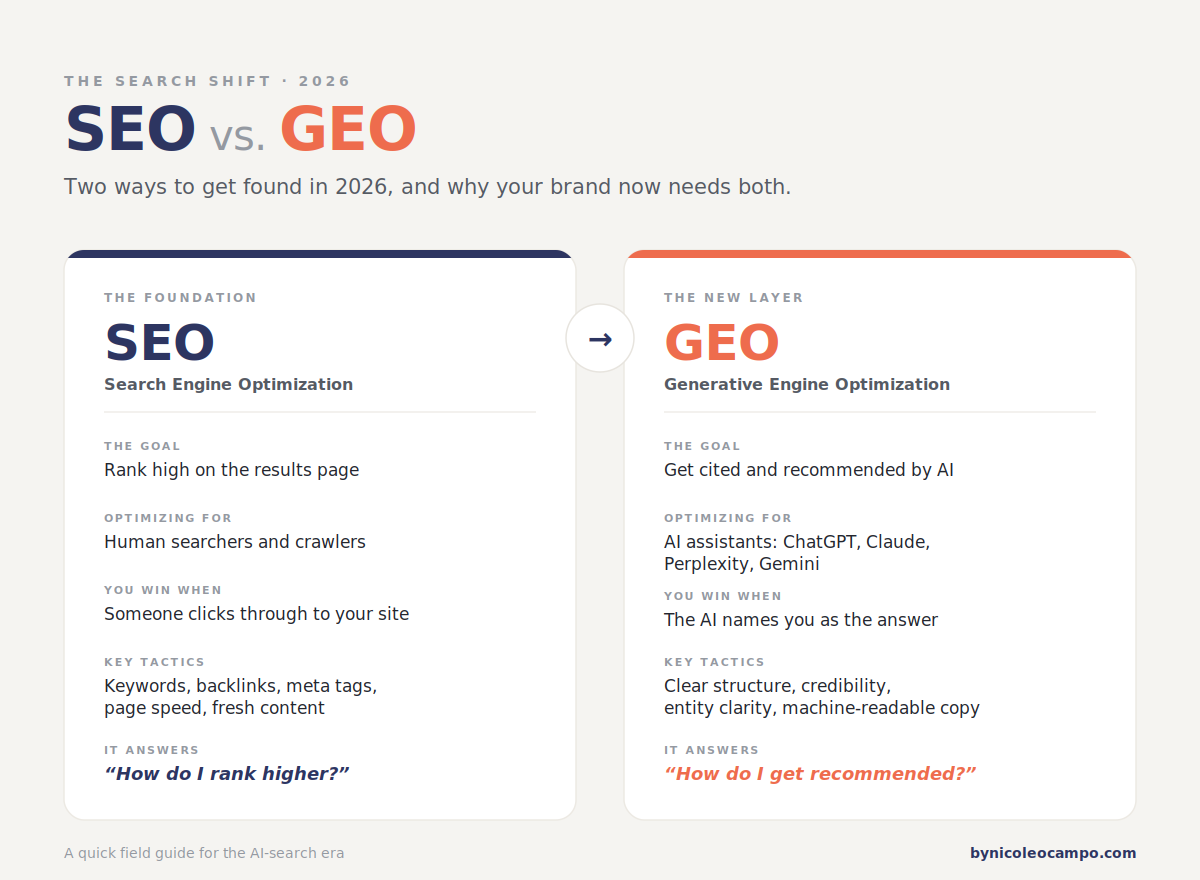
AI visibility: How discoverable and credible your brand is to AI systems, not just humans. A brand with strong AI visibility is one the assistants reliably surface and describe accurately.
Zero-click search: When someone gets their answer directly from an AI summary or search snippet without ever clicking through to a website. Great for the user, tricky for brands that relied on that traffic.
Sonic / sensory branding: Using sound, motion, and other senses as part of identity. Example: the distinct audio cue a streaming service plays at startup, or Mastercard's well-known sound logo.
Adaptive identity: A flexible brand system (logo, colors, type) designed to reshape itself across contexts: a square for a profile photo, a horizontal version for a banner, an animated version for video, without losing recognition.
Total branding: The view that every touchpoint, however small, is part of the brand. Your email tone, packaging, error messages, and DMs all count.
Retail media: Advertising placed on a retailer's own platform (like sponsored product listings on Amazon or a grocery chain's app). One of the fastest-growing ad channels in 2026, with a large share of marketers planning to increase spend.
Synthetic data / synthetic audiences: AI-generated stand-ins for real customers, used to model and test how an audience might react before spending real money. Kantar reports its synthetic modeling can reach 94 to 95% accuracy versus real-world results, letting brands test ideas without relying solely on historical data.
Agentic AI: AI that doesn't just answer questions but takes autonomous action: researching, comparing, scheduling, even purchasing. In marketing terms, this AI is increasingly the "customer" a brand has to win over.
Purpose-driven branding: Building identity around a genuine cause or set of values, where the mission is baked into how the business actually operates.
Brands getting it right (and one dividing the room)
Tripadvisor refocused its identity around real user-generated content and lived-in, human stories, doubling down on trust and authenticity rather than polish. A smart move in an era where credibility is the whole game.
Eventbrite rebuilt its brand system around the emotional anticipation of an event, leaning into feeling rather than features.
Nike keeps demonstrating how to use nostalgia without feeling dated, pairing throwback emotion with a modern frame so the brand draws people in without getting stuck in the past.
Patagonia remains the textbook example of purpose done right, with environmental commitment that genuinely runs through the business rather than sitting in an ad.
Canva is increasingly studied not just as a tool but as a brand, a case study in clarity, accessibility, and consistent experience.
Amazon, OpenAI, Verizon, Walmart, and Lyft all made quiet, subtle brand tweaks rather than dramatic overhauls, part of a broader "quiet rebrand" trend where heritage is preserved and refined rather than thrown out.
Jaguar is the cautionary, conversation-starting one. Its bold repositioning as an all-electric luxury brand, under the provocative "Copy Nothing" philosophy, has been called everything from fearless to pretentious. It's a useful reminder that radical change generates attention, but attention isn't the same as affection.
What this actually means for you
If you're building your own brand or a small business, you don't need to chase every trend. The best advice circulating right now is the "brand as a tree" idea: your roots, meaning your name, your core values, your purpose, stay deep and steady, while the leaves, meaning seasonal colors, motion style, photography, can flex with the times.
A few practical moves for 2026:
Make sure an AI can describe you accurately. Clear, well-structured information about who you are and what you do is now a branding task, not just an SEO one.
Anchor before you adorn. Get clear on your core identity before applying any trend, so you flex without losing yourself.
Pick two trends, not ten. Choose the ones that genuinely fit you. A bakery might lean into handmade warmth and local feeling; a tech product might lean into kinetic, modular design.
Build a small, real community rather than chasing the biggest possible audience.
Be a little weird on purpose. A distinct point of view is far more memorable than a polished one nobody remembers.
Branding in 2026 rewards the same thing it always has, clarity and trust, but the playing field has changed. The brands that win are the ones AI engines find credible, that people genuinely care about, and that know exactly who they are while everything around them shifts.
That last part has never been a trend. It's just good branding.
Want help shaping the next version of your brand? Let's talk.
Let’s talk about yours.
I offer 1:1 brand strategy sessions for founders and businesses ready to build with intention.
Book a session